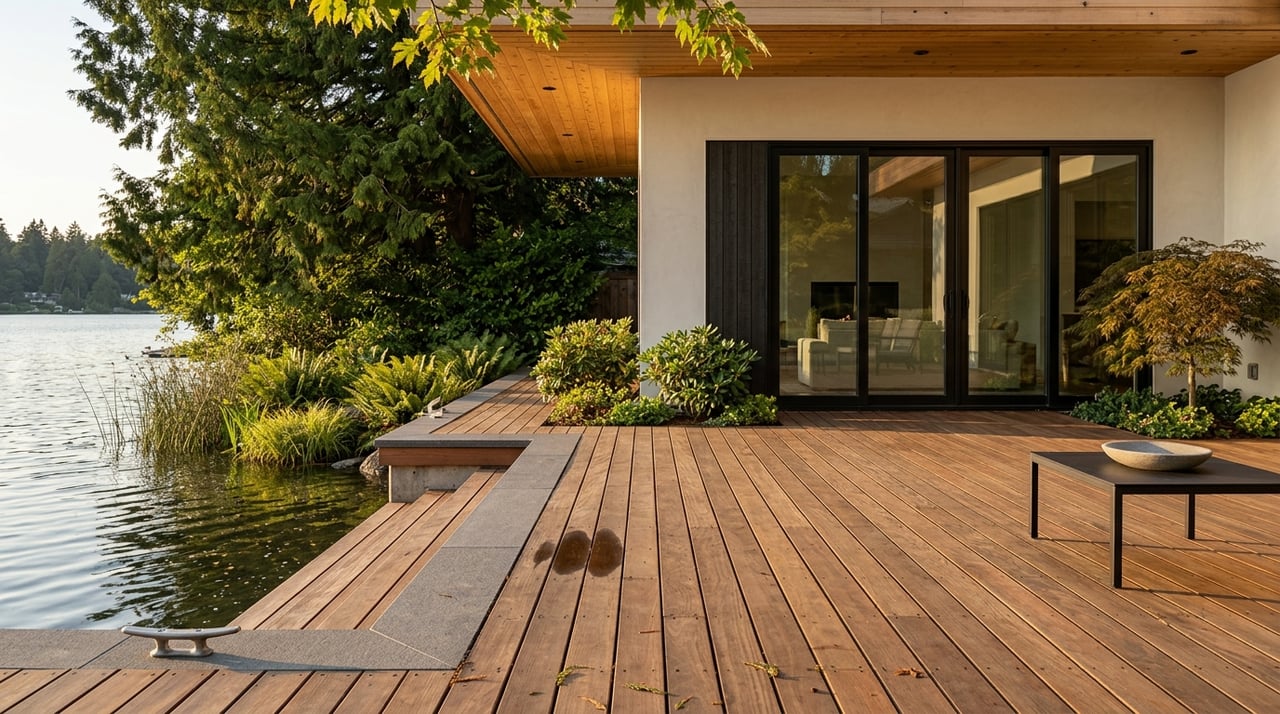
Wondering what “waterfront” really means in Lake Oswego? You are not alone. In this market, a home on the lake, a home with shared lake access, and a home with a lake view can offer very different rights, costs, and ownership responsibilities. This guide will help you sort through those differences so you can buy with more clarity and confidence. Let’s dive in.
Why Lake Oswego waterfront is different
Lake Oswego’s waterfront market is shaped by a private lake system, not a typical public shoreline. According to Lake Oswego Corporation, it stewards 415 acres of Oswego Lake, Lakewood Bay, and lakefront properties, and lake-related operations are funded through annual assessments and license fees.
That structure matters when you are comparing homes. A property described as waterfront may come with direct shoreline frontage, while another home may only have access through a shared easement lot. A third property may simply enjoy water views with no lake rights at all.
The City of Lake Oswego also has limited public access to Oswego Lake. The city states that public entry is available at Lower Millennium Plaza Park through concrete platforms and is limited to non-motorized craft, subject to park rules and Oregon State Marine Board rules.
Types of Lake Oswego lake properties
True waterfront homes
True waterfront homes sit directly on the lake or bay and may include features like docks, boathouses, or boat lifts. Still, those features are not automatic rights. Lake Oswego Corporation treats them as privileges that are subject to its rules and approval process.
Its current waterfront guidelines state that only docks, boathouses, and boat lifts may extend beyond the shoreline. The guidelines also say infill is prohibited, docks may not extend more than 16 feet beyond the seawall without special approval, and boathouses are not guaranteed at every location.
For buyers, that means the physical presence of a dock or boathouse does not answer every question. You still need to confirm what is permitted, what is grandfathered, and what may need updates or repair.
Easement-backed homes
Some homes are not directly on the lake but still qualify for lake access through easement lots. Lake Oswego Corporation says it owns 20 lakeside properties used as easement lots, and more than 3,000 homes in Lake Oswego are eligible for lake access.
Each easement lot has its own bylaws, volunteer-run association, and fee structure. Amenities can vary, which means one access arrangement may feel very different from another.
This is one of the most important details to verify early. Lake Oswego Corporation states that lake-access rights are tied to recorded deeded rights, cannot be sold or transferred, and require the member to reside in the qualifying residence.
Cabana lots and Lakewood Bay properties
Lakewood Bay has its own distinct property considerations. Lake Oswego Corporation’s waterfront rules note that waterfront cabana lots in Lakewood Bay may be improved with residential improvements.
Those improvements still must follow setback, navigation, safety, and sightline requirements. If you are considering one of these properties, it is especially important to review the site-specific rules before making assumptions about expansion or redevelopment.
View homes on hillsides
Lake view homes can offer a different kind of lifestyle value. In many cases, they trade direct lake access for easier day-to-day ownership, but they can come with their own limits.
Lake Oswego’s hillside protection code applies to development on hillsides or erosion-prone land. The city’s Sensitive Lands program also protects certain streams, wetlands, tree groves, and wildlife habitat.
That means a beautiful view lot may still require careful due diligence. Tree protection, slope constraints, and future neighboring development can all affect what you can build, how you maintain the property, and how secure that view may be over time.
Lifestyle benefits and tradeoffs
What draws buyers to lake living
For many buyers, the appeal is simple. Lake Oswego offers a managed recreation environment that supports swimming, boating, and time on the water close to home.
Lake Oswego Corporation says it maintains water flows, water-quality testing, flood control, dredging, hydroelectric power generation, and dock and access infrastructure. That ongoing stewardship is part of what makes the lake experience feel organized and actively managed.
What ownership rules can look like
The tradeoff is that lake living often comes with more rules than a standard neighborhood setting. Lake Oswego Corporation requires current boat licenses for boats on the lake, current operator licenses for powerboats, and Coast Guard-approved personal flotation devices for every occupant. Children age 12 and under must wear a personal flotation device.
The corporation also uses a point-based enforcement system for violations such as wake issues, excessive speed, and safety violations. If you are used to a more flexible setup, this is worth understanding before you buy.
Community expectations also extend beyond the water. Lake Oswego Corporation’s easement rules state that gatherings that interfere with public peace or are offensive to neighboring owners are prohibited, that users must comply with city noise ordinances, and that easement lots have a 10 p.m. to 6 a.m. curfew.
Permits and approvals you need to understand
LOC approval and city approval are separate
One of the biggest mistakes buyers can make is assuming one approval covers everything. It does not. Lake Oswego Corporation states that a Facility Permit is required for waterfront construction, installation, or modification on its property or adjacent waterfront areas.
It also states that its approval does not replace municipal, state, or federal requirements. In addition, shareholders must be current on assessments before a permit will be issued or renewed.
City permits still matter
The City of Lake Oswego separately requires building permits for docks and floating structures. The city’s accessory-structure handout says Lake Corporation approval is required before a dock or boathouse permit is submitted.
That same city guidance also calls for floodplain and base flood elevation information where applicable. It further states that erosion control and tree protection or tree removal applications must be submitted with the building permit if needed.
Steep lots can trigger more review
If the property sits on a steep slope, your review process may go beyond standard permitting. The city’s hillside protection code says development on hillsides or land with erosion potential must minimize soil disturbance.
Sensitive lands review may also apply in certain areas with protected environmental features. For buyers looking at a view home or a lot with expansion potential, this can shape both cost and timeline.
Waterfront structures have clear limits
If a home includes a boathouse or dock, it is important to understand the rules around use and upkeep. Lake Oswego Corporation says boathouses are a privilege, limited in size, intended for day use only, and may not include habitable rooms or overnight accommodations.
Its rules also state that lighting must be shielded and low profile. On easement lots, unmaintained docks and floats must be removed.
Timing matters for waterfront repairs
Not every repair can happen on your preferred schedule. The City of Lake Oswego posts Oswego Lake draw-down notices to help owners plan dock, boathouse, and utility work.
If a property needs waterfront repairs, ask whether the work depends on the annual draw-down window. That timing can affect your planning, your budget, and even your decision about when to close.
Questions to ask before writing an offer
Before you move forward on a waterfront or view property, slow the process down and confirm the details. In Lake Oswego, small differences in rights and approvals can have a big impact on value and future use.
Here are some smart questions to ask:
- Does the property have direct waterfront, deeded easement access, or only a lake view?
- If there is a dock, boathouse, or lift, is it permitted and consistent with current Lake Oswego Corporation and city standards?
- What recurring costs apply, such as annual assessments, easement dues, boat licenses, operator licensing, or separate association fees?
- Are there slope, floodplain, tree-protection, or sensitive-lands issues that could affect remodeling, landscaping, or additions?
- Could neighboring changes affect the view over time?
- If repairs are needed, what is the likely permit timeline and does it line up with the draw-down schedule?
Why careful guidance matters
Lake Oswego waterfront and view homes can be exceptional lifestyle properties, but they reward careful review. Two homes with similar photos and similar price points may come with very different access rights, maintenance needs, and future limitations.
That is why local context matters so much. A thoughtful buying strategy includes reviewing deeded rights, association structure, permit history, and site constraints before you commit.
If you are considering a Lake Oswego waterfront, easement-access, or view property, working with a local advisor who understands nuanced properties can make the process feel much more straightforward. For tailored guidance and a concierge-level experience, connect with Evoke Property Partners.
FAQs
What is the difference between a Lake Oswego waterfront home and a lake access home?
- A waterfront home sits directly on the lake or bay, while a lake access home usually uses a shared easement lot tied to recorded deeded rights.
Can you buy lake access rights separately in Lake Oswego?
- No. Lake Oswego Corporation states that lake-access rights cannot be sold or transferred separately from the qualifying residence.
What public access is available on Oswego Lake?
- The City of Lake Oswego states that public access is limited to Lower Millennium Plaza Park concrete platforms for non-motorized craft, subject to park and marine rules.
Do Lake Oswego docks and boathouses require permits?
- Yes. Lake Oswego Corporation approval and City of Lake Oswego permits may both be required for docks, boathouses, floating structures, and related waterfront work.
Are Lake Oswego view homes easier than waterfront homes?
- Sometimes, but not always. View homes may avoid direct lake infrastructure, yet they can still face hillside, erosion, tree, and sensitive-lands constraints.
What should you verify before buying a Lake Oswego lake property?
- Confirm the type of access, permit status of waterfront features, recurring fees, site constraints, and whether any needed repairs depend on the city’s lake draw-down schedule.
